Mother Nature
Connecting to the divine through nature
Mother Nature. Have you ever thought about that phrase? We’ve all heard it. ‘Mother Nature.’ Not Father Nature. Not Miss Nature. But, ‘Mother’ Nature. That our Earth bears life and fruits makes natural sense for use of the term. But more than that, it is the healing and nurturing aspects of Mother Nature that I want to focus on.
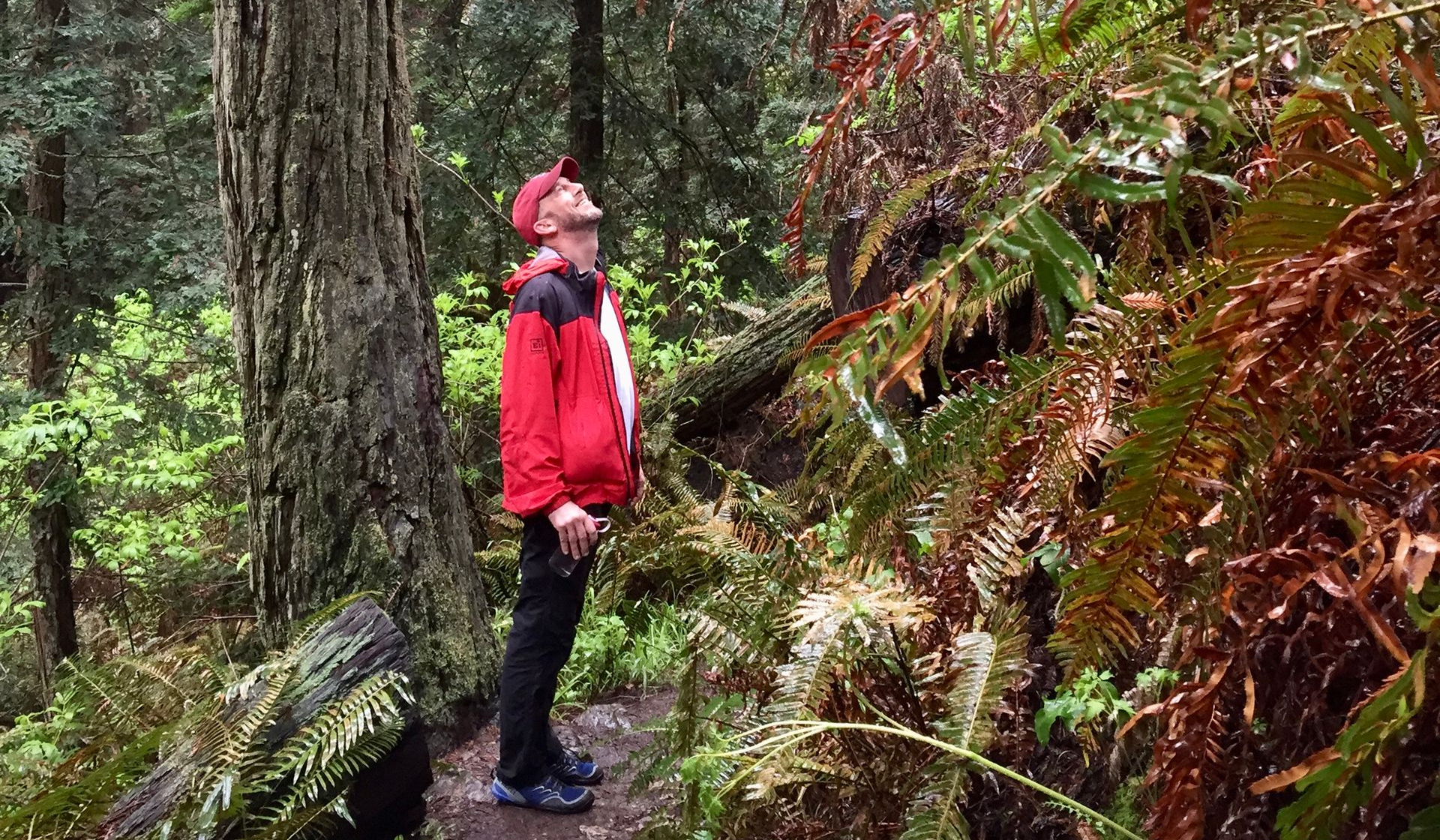
In my Concord Hymn - Part II, I wrote about how Ralph Waldo Emerson saw Nature as a direct manifestation of the divine. A gateway to spiritual truth. An expression of the “Over-Soul.” He and Thoreau both believed, due to their direct experiences, that there was potential for powerful connection to the divine through direct encounters and experiences with Nature. Thoreau took it to the point of two-plus years of relative seclusion at Walden Pond. Emerson famously spoke of the “transparent eyeball,” and wrote that a person who truly opens themselves to Nature, a quiet walk in the woods or staring up into a starry sky, could undergo a kind of ego dissolution and become a part of the whole. That’s connecting with the divine. With God. They felt this was spiritually and emotionally healthy. A tonic for the creeping industrialization of American life. What I would point out is that it is this, and more. It can also be directly physiologically healthy and even overtly healthy.
Emerson felt nature to be our best instructor. Humility? Get caught out at sea in a storm. Perspective? Check out a clear night sky. Nature is there to teach all the lessons we need. So, is God.
Connecting to the divine. That’s what they sought. And found. And it turns out it’s incredibly healthy.
Grounding
One of the unique aspects and treasures of my childhood was how we spent our free time. Our vacations. Around the age of six, while living in Glastonbury, Connecticut, through a small inheritance my parents were able to purchase an RV or camper. It was a classic 70’s Winnebago that had, above the driver and passenger chairs, a bunk where my brother and I would sleep. There was a large front facing window in the bunk and many mornings upon awakening we’d simply watch out the window as our father drove us towards the next adventure in the rising sun.
And oh, what adventures we had. Camping at campgrounds all over the continental United States. A special Christmas camping in a forest, where we were the only souls present, other than the Ranger who broke bread with us. Summers at the Cape. Seeing the South Dakota badlands and Mount Rushmore. The desert of Utah. The swamps of the Everglades. And as kids, my brother, sister, and I would explore the surrounding terrain together in depth and often unsupervised much of the time. From my memory bank, travel and exploration was all we were doing when not at school or work. But that’s probably because those adventures and accompanying memories were sticky.
It is the presence of some form of deep emotion that makes memories stick. Some are obvious like the profoundly positive emotions felt with the birth of a child, a wedding between two loves. Tragedy can do the same, the death of a loved one. Some profound victory or defeat, and the accompanying emotions cause an inherent stickiness to the memories of the event.
But even more interesting is that at times that deep emotion that fixes the memory can be something more subtle. More numinous. Two memories come back to me:
I’m six years old. We live in Glastonbury, Connecticut. Our home backs up to a creek and surrounding woods. Out past the back sliding glass door is a fenced-in mulch pile for leaves. There are lots of them. And it is twilight. The sun is gone but it is not too dark. And I sit on the top of the mulch pile. Parents and brother and sister are not present. They’re in the house. Not far away. And I simply sit there on the top of this giant pile of leaves. My back rests against a tree. I feel the light breeze. I hear the rustling of leaves in the breeze. The sounds of the nocturnal world arising. And I sense a presence. Around me. Through me. A part of me. I am part of the divine. God is present all around me. And the memory sticks.
It is the summer of 1990, prior to my final semester at Texas A&M University. I have just taken a bus back from campus and have a short walk back to the apartment I rented for the summer. I am weighed with grief. My girlfriend of three years has bailed on our engagement and done so in spectacular fashion. This was supposed to be our place for the summer. But those dreams have been incinerated. And left in the ash is my grief. Cold. Heavy. I feel isolated. Cut-off. The bus has left me a couple blocks to walk. I take a shortcut. A grassy meadow. Out of character I take my shoes off and walk through the fresh cut grass beneath my bare feet. And I connect. There is something. Nurturing. Healing. I can feel it. And though my grief is not lifted, I feel a tonic to my soul flow through me. And the memory sticks.
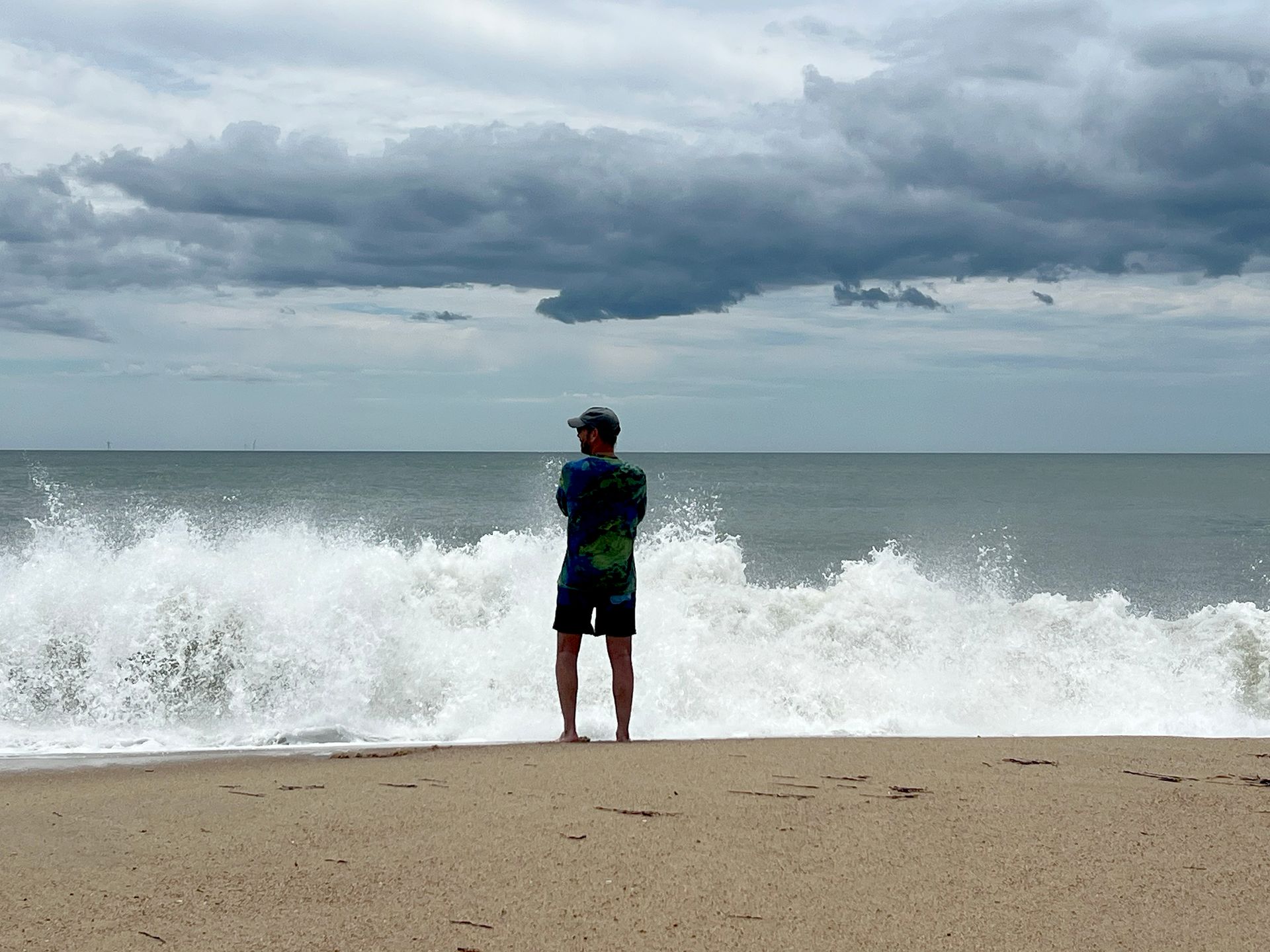
Grounding is the term for that direct contact and interaction with Mother Earth. It can be a barefoot walk through the grass, body surfing a wave at the beach, or tilling the soil of your garden. One could explore and perhaps debate the scientific particulars, the biophysics regarding transference of electrical charges, the countering of free radicals, oxidative stress and reduction of inflammation. You could discuss its impact on cortisol levels and thus its ability to positively influence sleep and stress management. You could learn of its impact on your autonomic nervous system; the increase in heart rate variability (HRV) and increased time in our parasympathetic (“rest and repair”) state. But really, all you really need to know, is that it works.
And for that kind of knowledge, you need first-hand experience. The more intimate the better. The more consistent the better.
It’s like the knowledge of God itself. There is no argument to be had to lead to conviction. It is felt. Sensed. Then it is truly known. And this can be discovered, remembered, in the world created around you. And those experiences can provide holistic health benefits for you beyond what you might expect.
The Disconnect
One of the clear areas of concern for the collective health of our society, and people in general, is the progressive disconnection between the natural world and each of us. What is not open to debate is that people are spending less and less time in nature. With the advent of various technologies and the burgeoning growth of our populations, we have over time been severed from our Mother Earth. The umbilical cord has been cut. For too many of us our daily lives have little to no interaction with the natural world. Sometimes that can feel oddly involuntary. But there are clear detrimental consequences due to both the absence of this consistent daily natural interaction, which is how we were designed and evolved to be, as well as what it has been replaced with. Digital technology.
You want a scare? Look at the data regarding screentime for children. What are we losing disconnected from our “Mother?” We’re losing our instructor. Our teacher. We’re losing our sage. Our Healer. And our health goes with it. As do our children. Remember the impact of those formative years for children I wrote about in Concord Hymn – Part I? The sensitivity to stimuli of the developing brain? The crossover point, for when screens overtook outdoor play for the first time in history was 2010. And it’s worsening.
Two clear broad trends...
- Reduced time in natural environments
- Increased exposure to digital media
We’re not interacting with the natural world. And we’re replacing it with digital poison. What makes a poison? It’s the dosage. And the dose of digital consumption has become toxic. What we need to do now is to adjust our doses.
The Remedy
Step 1: Decrease Digital Consumption
Here are the numbers: Average daily screen exposure across devices:
- Adults: ~7 hours a day
- Gen Z (teens – 20’s): 9+ hours a day
Generally speaking, these numbers have doubled or tripled over the past 25 years. Our kids are spending more time on entertainment screens now than with a full-time job.
I know it’s not easy to quit. Or to take control. For any of us. It’s meant to be addictive. That’s what drives consumption. And there’s lots to sell to you. But it’s time to view your life in the narrative of a story. And for you to be the hero of it.
There are plenty of books and online videos discussing the strategies to decrease the digital drugs we’ve become hooked on. What I would tell you simply is put your “phone” down and get outside. Which brings us to Step 2.
Step 2: Surround yourself with nature.
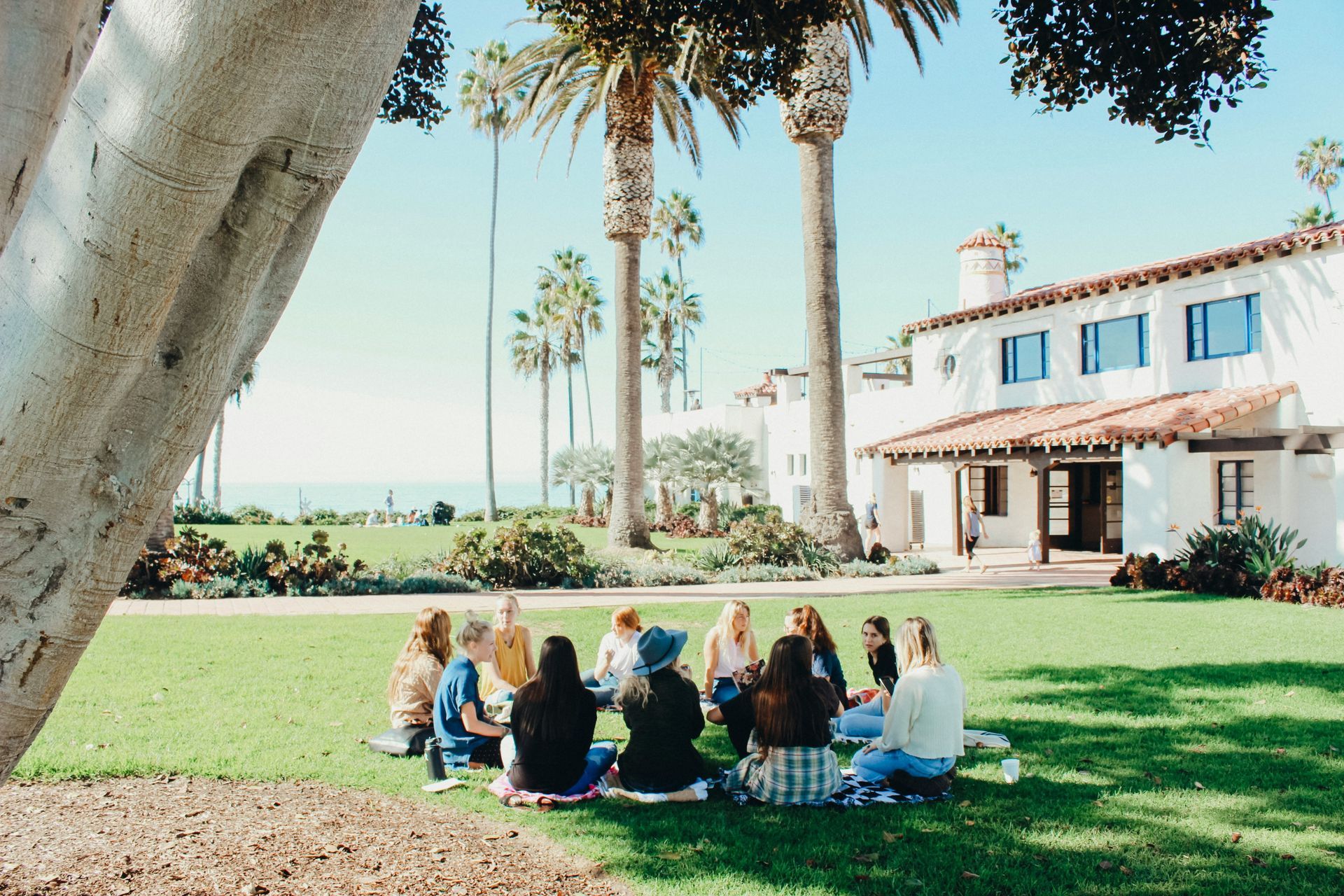
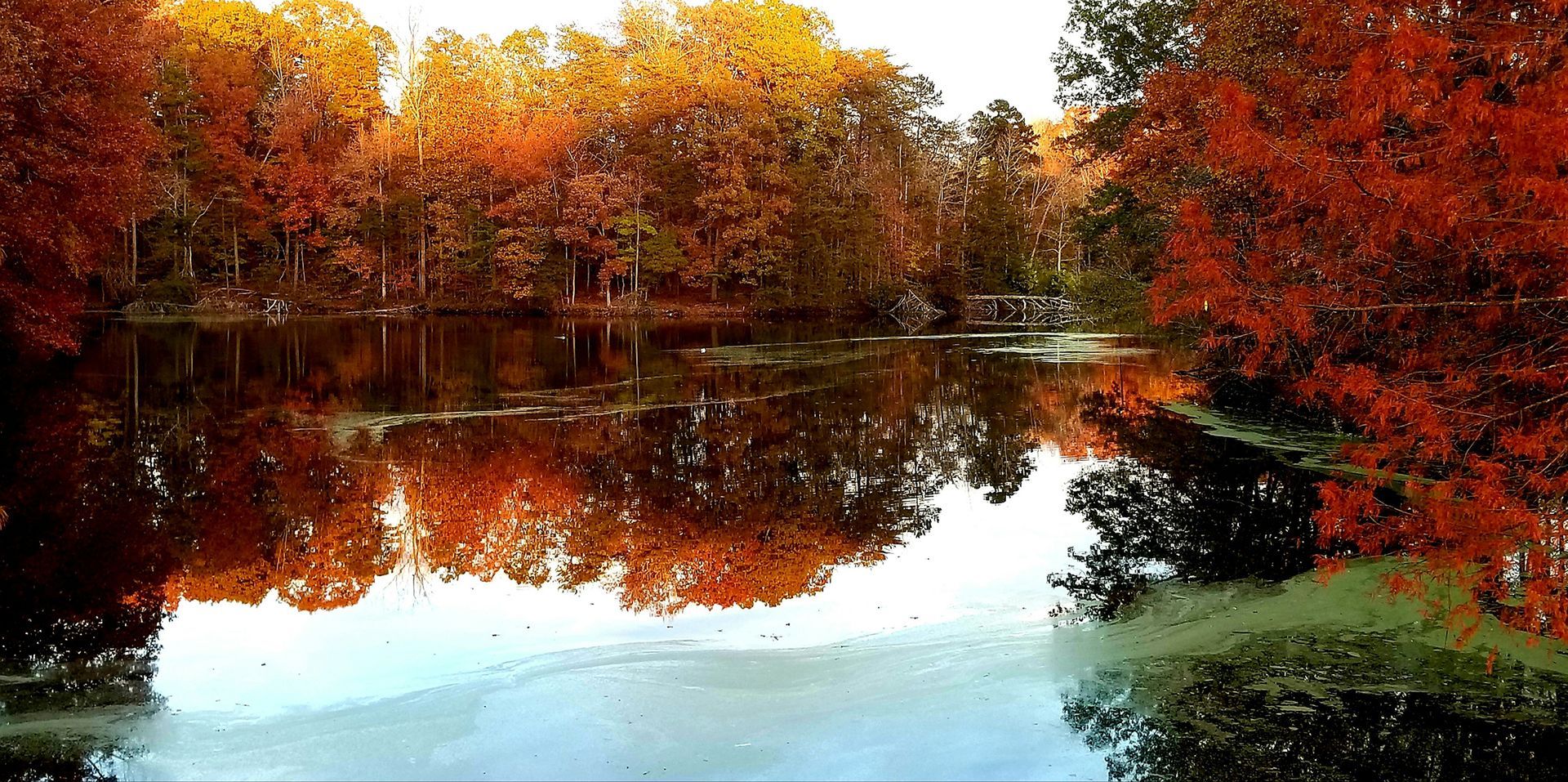
Walks. A picnic. Even simply photos of landscapes or natural beauty. Indoor plants. Pets. There is evidence that simply viewing nature can be healing. Look up the Stress Recovery Theory, which suggests that humans have an automatic calming response to natural environments. A famous real-word study looked at hospital design and its impact on recovery. Patients with windows facing trees recovered faster than those facing a brick wall. Shorter hospital stays. Fewer pain medications. Less distress. This is the drive behind Biophilic Design, whereby hospitals or schools for example, intentionally incorporate elements of the natural world into built environments. It’s calming. It’s healing. It’s productive and profitable in more ways than one.
Recent work with brain imaging has confirmed that there are very real effects on areas of the brain like the amygdala with these exposures and experiences. Even something as simple as the color of the room you are in can provide calming and thus healing. Green and blue have been identified as standouts which suggests that these colors, associated and aligned with life, vegetation, and water, are hardwired into our brains.
In the 1980’s the Japanese government promoted Shinrin-yoku, roughly translated to “taking in the forest atmosphere” and more commonly known as ‘forest bathing.’ This was done as a public health initiative and has been widely studied since. The importance and focus here, contrary to hiking or exercise, was an emphasis on awareness and immersion rather than physical exertion. A slow and sensory-focused session in nature. So, sitting quietly and taking it all in can be all that is needed.
In our clinic, we have several photographs of natural landscapes taken throughout our beautiful state of Texas. Those photos are for us, as well as our patients. The walls are painted shades of greens, blues, or gold. Our home is similar. The nature walks we plan monthly are aimed at the same dual benefit.
I encourage each and every one of you, whether with our community or your own, whether in the company of others or even solitary when the occasion presents itself, to get out there into the natural world. And upon arrival to stop, breathe, listen. Soak it in. You are not alone. God is here. Can you hear him? Can you feel him?
-Andrew M. Dale, MD
Dr. Dale’s Journal