Community
Building connections for a healthy and vibrant life
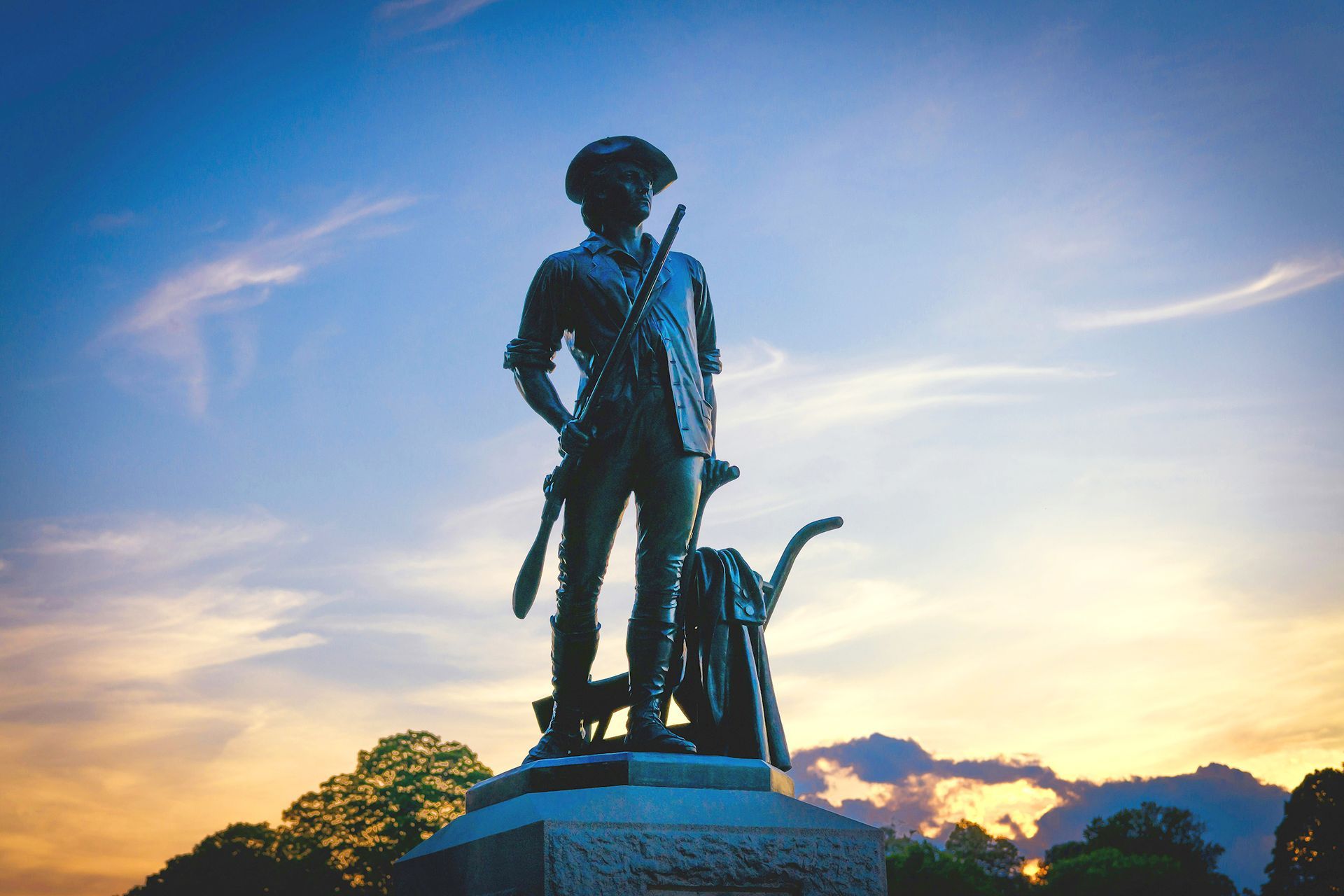
As I mentioned in my earlier posts, I spent my first five years of life in Concord, Massachusetts. From there our family moved to Glastonbury, Connecticut, where we resided for the next two years. In fact, our path over the next ten years was characterized by a move and fresh start about every two years. Hartford, and West Hartford, Connecticut, followed Glastonbury. Then it was on to Palm Beach Gardens, Florida, for a couple of glorious years before moving back to Connecticut. It was only after settling in Houston, Texas, at the age of 15 that this pattern was broken. (My brother spent his first three years of high school at three different schools.) Now, I will agree that there are some clear benefits to learning to adapt to substantial and frequent change in your life. But on the flip side of that coin, more than anything, is the loss of developing a community. So then, what is it that makes a community?
It’s more than just your family. More than just your college friends or group. More than your church. Your workplace. Certainly, all of these groups can serve as a type of community that supports one another. But I’m talking about a different kind. The kind that existed for hundreds, even thousands of years, and at the center of every human society. Tribes.
It’s about more than just geographical proximity. At the core, shared interests and goals. Mutual collaboration and support, fellowship, serving to steer the health of the individuals and the collective tribe towards optimal outcomes. Sure, you can have an online community or network that serves to facilitate and meet some the communal needs of us, but it lacks that direct consistent personal experience and multigenerational input and participation that the historical community or tribe served so centrally at one time.
The Northfield Schools & Conference
Back in 1879 the nation’s leading Christian Evangelist, Dwight Moody, directed his attention towards extending the Christian message directly into education. With the support of friends and family, Moody purchased land in the town of his birthplace, Northfield, Massachusetts, where he then went on to open the Northfield Seminary for girls in 1879. Two years later, in 1881, he established a separate campus, across the nearby Connecticut river, the Mount Hermon School for boys. Collectively, they became known as the “Northfield Schools.”
Moody’s intentions were that faith and the Bible, would be the foundation of not only belief but of the life of the school. Located in Western Massachusetts upon rolling green hills, the Northfield campus was a serene and tranquil setting with its quiet natural beauty. A perfect setting for the receipt of this type of instruction. Beyond the aesthetics of the layout and construction, beyond the beauty of the natural environment where it set, a tradition of community was established with faith at its center. In 1894, a committee of Harvard professors visited the campus and noted that a unique spirit pervaded the campus, that religious instruction was designed to bind together the students “into a harmonious working force, and certainly that result is, in some way or another, attained.”
Amidst all of the moving through my childhood years, there was the introduction of a community and tribe that served the needed purpose for me that was clearly missing. The Northfield Family Conference. Situated on the campus of this historical private New England secondary school, the Northfield Conference was founded in 1893 as a Christian conference for young women by Dwight Moody’s daughter-in-law Mary Whittle Moody. For one week of every year, they would meet on the campus of the Northfield School, which was situated on the grounds of the Moody family farm.
That conference continues to this day and over time evolved to include families and people of all faiths. In the mid-1970’s, the summer after 3rd grade, I attended my first conference with a close friend and classmate whose family had told us of the conference and was also in attendance. In my very first “Family,” there were two men, one a musician, and the other a magician and superlative stage performer, that made significant impressions on me. The fact that I play a guitar to this day stems from that experience.
It became a near annual ritual for our family. Despite the frequent moving and instability brought about by our everchanging geographic locations, it became an anchor, and not just due to its consistency. That same “unique spirit” that those Harvard professors noted across the campus has carried on through the years, and remains a part of the conference for everyone to this day. As an eight-year-old child, I knew there was something really special there. I couldn’t put my finger on it at the time, but some of the best friends I had, were friends I’d met there that I would only see one week out of the year. We’d write letters and count the days down until we could reunite. Additionally, I made friends with people of all different ages and generations. This sort of thing just didn’t happen out in “the real world.” It would be difficult to overstate the impact this solitary week would have on my energies and motivation for the other fifty-one without it. Amidst the constant change and turmoil, it served to center me, year after year. Bringing my mind and spirit back to the core truth. Community. Love being at the center of it.
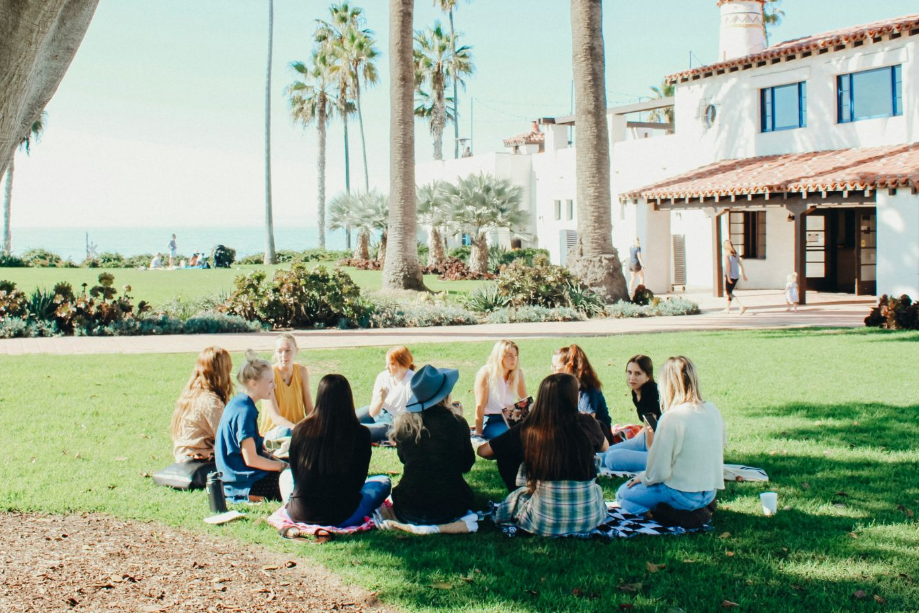
One of the features of the conference is a tradition called “Families.” All attendees of the conference are split up into groups for the week, called “Families.” Roughly eight or so members in each group with none being with an actual family member. The groups are made up of people of all ages, and meet every morning of the week for a couple of hours, 10 to noon, before breaking for lunch. Your group finds a spot on campus, away from the other ‘families,’ and sits outside somewhere in the green grass and hills and, as a group collectively, discusses life, faith, meaning, challenges, and hardships. There was often laughter, sometimes tears, songs. Games were a common ending way to end the sessions. In hindsight, it’s the backbone of the conference. Why? Because it built micro-communities within the larger community. It taught you to love your neighbor.
Evenings at the conference generally began with Vespers. A traditional evening prayer service marking the transition from day to night. Services were varied. Judaic, Quaker. Christian. Prior to this, I didn’t honestly know you could LOVE a church service. Singing was a big part of these services as well as in other activities during the week-long conference. Singing in unison. In communion.
As a physician, after spending over three decades collaborating with my patients on their health, certain truths have become evident for me. Patterns, as well.
Families are fragmenting; for various reasons. Communities are disappearing entirely. Religion and faith are on the decline. People are becoming increasingly isolated from one another. Connections are being lost. Severed. For those fortunate enough to have close extended families, it serves to fill the gap; but only to a degree. For others, the progressive isolation, void of the connection and purpose that is a necessity for thriving, leads to a path of depression, and often self-destruction. Of emptiness. It’s playing out all around us. In the house down your street. The retirement home down that cul-de-sac.
The Blue Zones
Ever heard of the Blue Zones? The term was popularized in a 2005 National Geographic article by Dan Buettner, and his subsequent book in 2008. To better understand the role of lifestyle and environment, Buettner set out to “reverse engineer longevity” by studying the populations around the globe that lived the longest. In association with National Geographic and with funding from the National Institute on Aging, Buettner and a team of demographers studied census data and identified five areas where people are living verifiably longer lives by a number of measurements: Ikaria, Greece; Loma Linda, California; Nicoya, Costa Rica; Okinawa, Japan; Sardinia, Italy. What’d they find?
For starters, only about 20 percent of how long the average person lives is dictated by genes, while about 80 percent is influenced by lifestyle and environment. Activity, outlook, and diet are key factors, but the foundation to their underlying behaviors is how people in these Blue Zones connect with others. And how faith is at the center.
“It takes a village.”
Two key pieces to point out regarding Buettner’s longevity research and the Blue Zones:
- Connections: people in Blue Zones tend to belong to a faith-based community. Notably, individuals of faith live 4-14 years longer than their counterparts who do not.
- Right Tribe: The world’s longest-lived people tend to “curate” social circles around themselves that support healthy behaviors. Healthy behaviors are contagious. And deleterious habits like smoking, excessive drinking, isolation, and loneliness, are also contagious. Choose wisely.
For myself, as I entered into early adulthood, a fracturing of family followed as my parents divorced and remarried; my brother, sister and I became adults and moved on with our lives. The routine of this pilgrimage disappeared. I finally returned to the conference with my own children, as well as my ailing mother, twice more in 2005 and 2007, before her passing in 2011. Faces had changed. Some had disappeared. Some had aged. Some were entirely new. But the magic was still there.
I think we all tend to underestimate the impact that moments, that people, that ideas, can have on our lives. Here was an idea, that became a school, that beget a conference. That continues to this day. Impacting lives in ways that cast out like ripples through space and time. And the unseen force, called love, extends beyond the immediate community, bound by faith at its core.
Here at Ministry Medical, we recognize the value of community; of faith. We recognize the role in health that connection and community can and do provide. We encourage you to find your tribe. I encourage you to connect.
-Andrew M. Dale, M.D.
Dr. Dale’s Journal