A Concord Hymn, Part One
My concise summary:
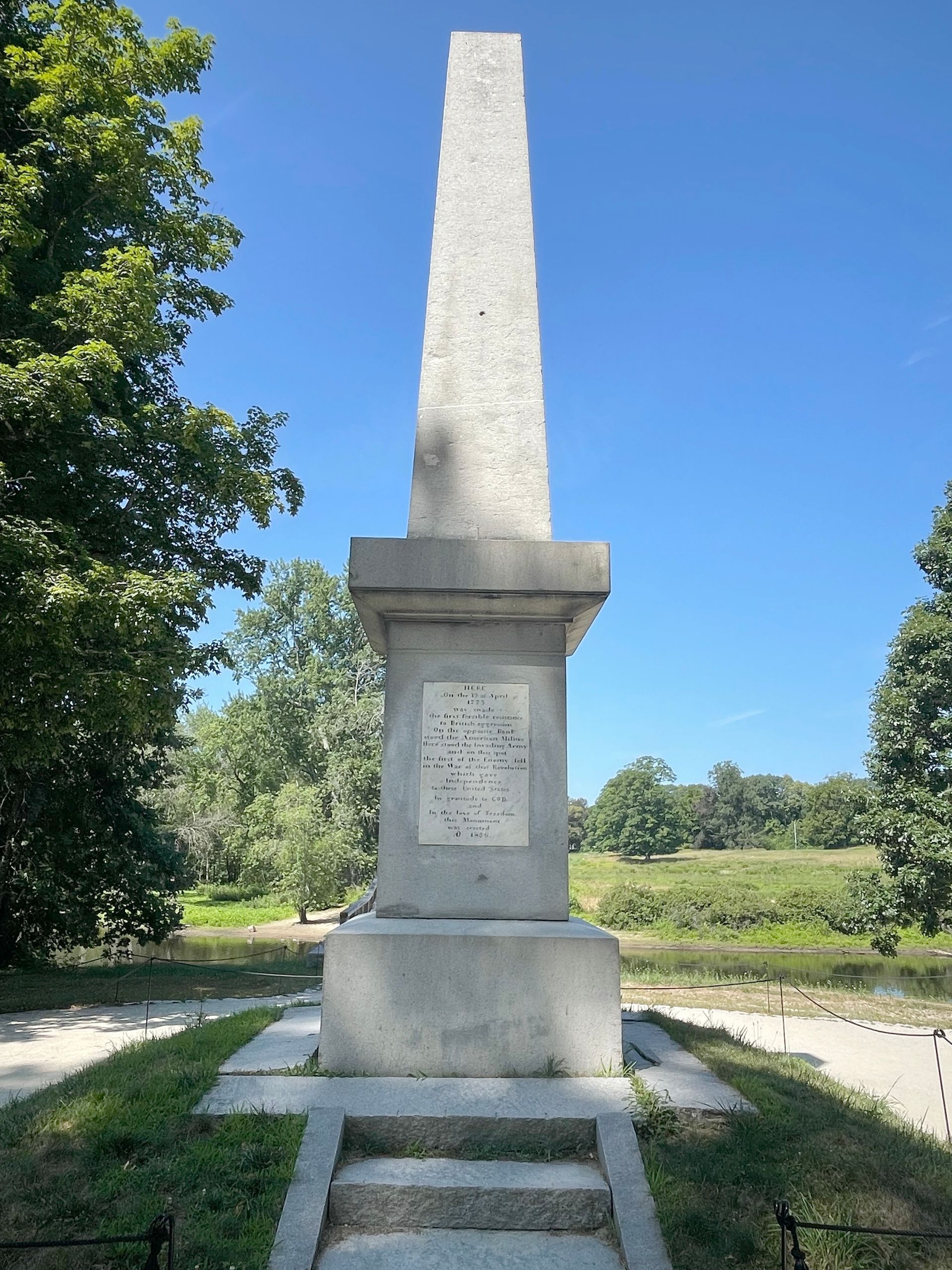
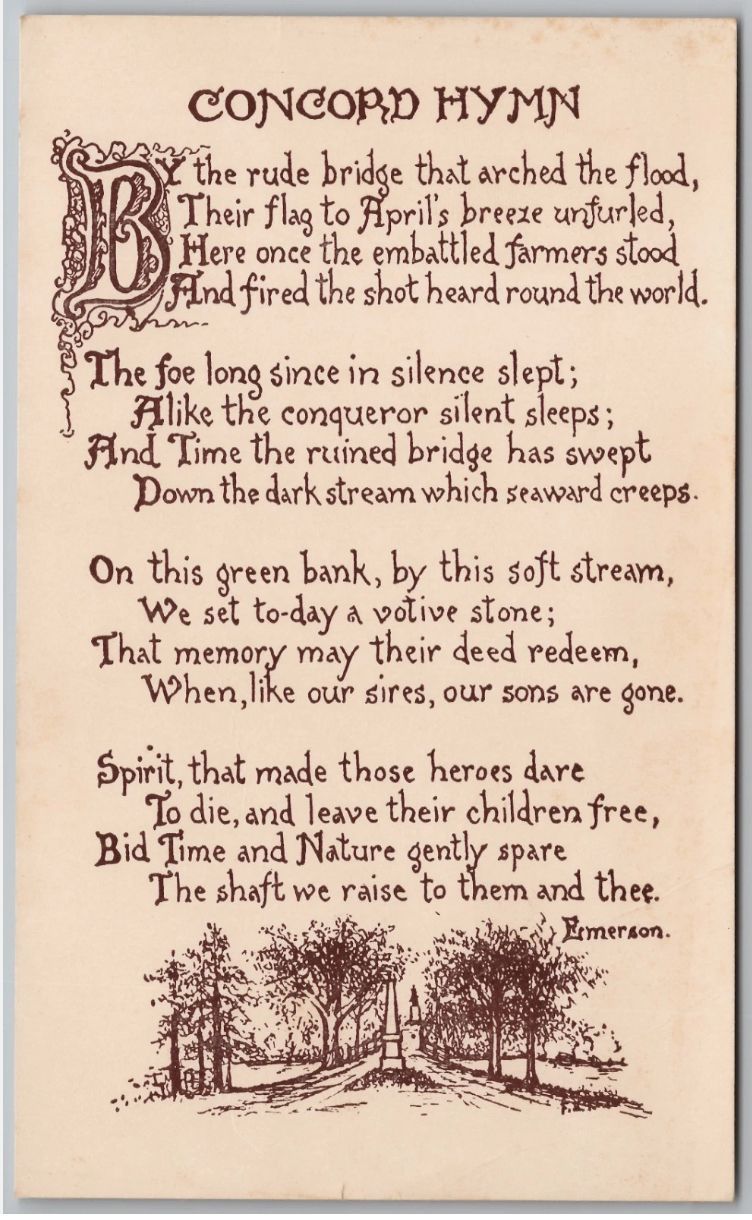
Stanza 1: This is where it all started.
Stanza 2: Everyone on both sides of that war are now passed, and even the bridge has been destroyed by the ravages of time. Life is ephemeral.
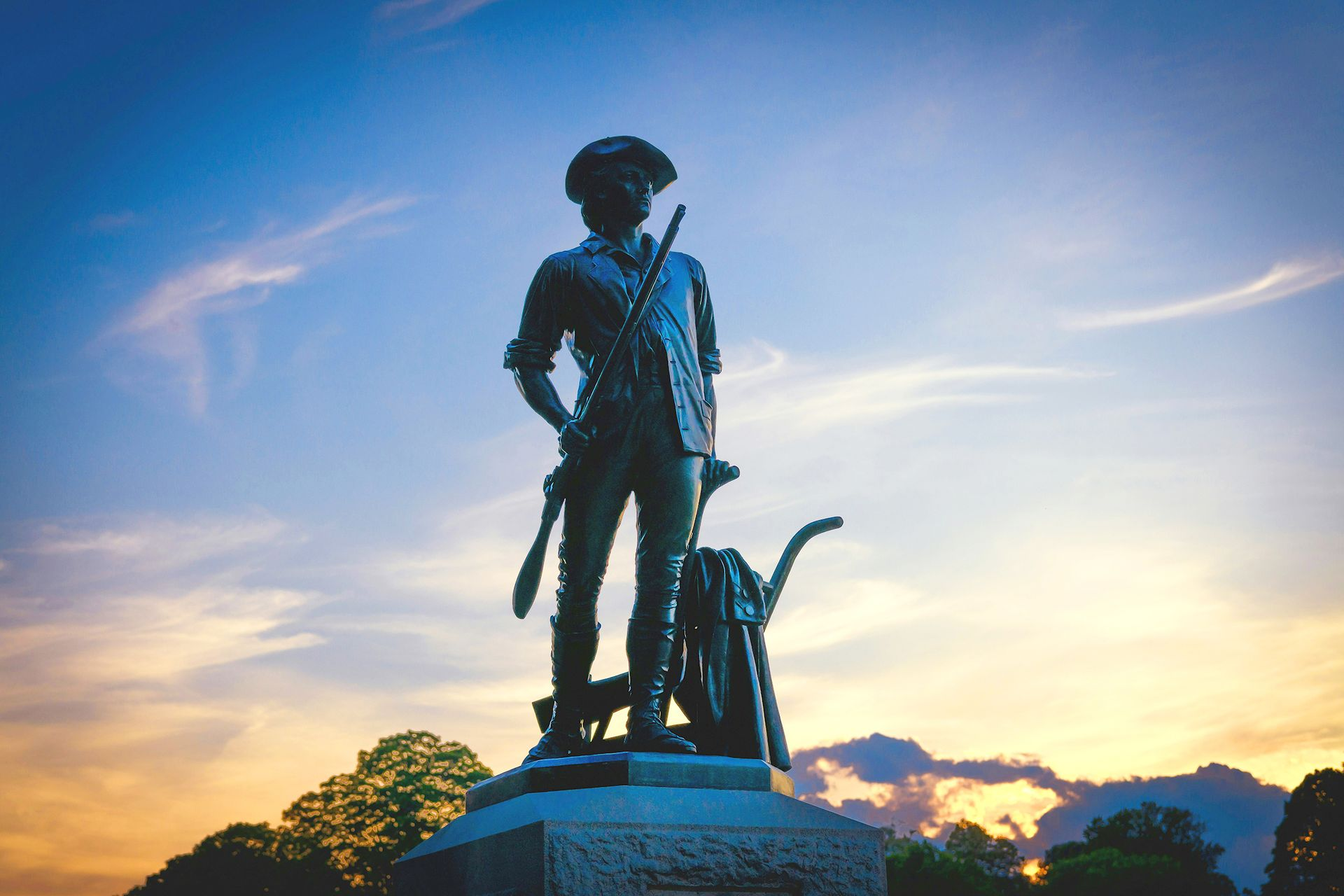
Stanza 3: This monument is to serve as a reminder to later generations of the courage and deeds of those farmers/fighters and the risk and sacrifice that was required to secure their freedom. It’s a physical pledge made by the living to the dead. Gratitude and obligation.
Stanza 4: Prayers to the divine to not only protect the monument and the memory it embodies, but to protect the freedom that the fighters won for their descendants.
Emerson’s message: it is not enough to put up a stone and recite a poem once a year. If later generations become complacent, corrupt, or indifferent, then the memory of the battle becomes hollow and the sacrifice loses its living force. The people of 1836 – and by extension, us – must prove themselves committed to principle as those “embattled farmers.” Remembrance is turned into a responsibility: to honor the past by living up to its ideals in the present.

What are the effects of being immersed in these messages and ideals early in life? Of having sacred monuments in your purview day to day; to experience battle reenactments, and memorial parades and essentially be raised in an environment that serves as a living classroom for American ideals? Themes of resistance to tyranny, civic duty and the independence of the American patriotic spirit permeated local culture, including the classrooms.
With the hindsight of my years, I see the influence of these formative times wiring my brain and leading me, in no small part, to where I stand today: opening an independent medical clinic with a focus on community, connection, faith, and duty. Some messages and memories not only deserve, but importantly, need to be revisited periodically.
In Part Two, I’ll write more about the “Sage of Concord,” Ralph Waldo Emerson, his friend and Concord native Henry David Thoreau, Walden Pond, and the Transcendentalist movement born out of Concord, and how these additional pieces of Concord history have influenced our country, the world, and my spirit and soul.
-Andrew M. Dale, MD
Images sourced from author, wikipedia and unsplash.com
Dr. Dale’s Journal